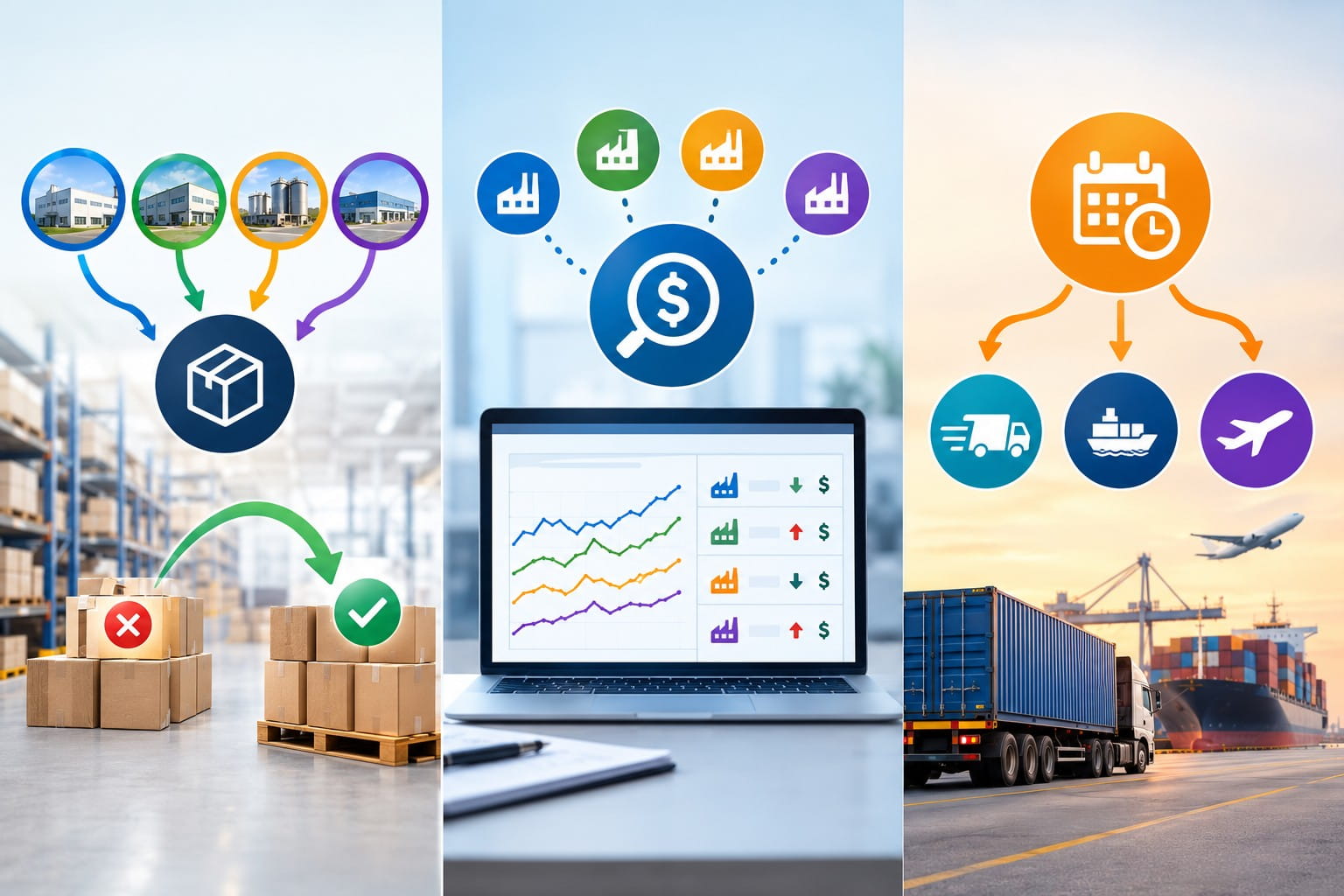
Industrial procurement becomes more resilient when buyers are not dependent on a single supplier or a single country of origin. A multi-source strategy does not mean buying the same product from many vendors without a plan. It means maintaining the ability to identify alternative manufacturers, distributors and regional supply routes when availability, price or delivery conditions change.
This approach is particularly useful for spare parts and components. A familiar supplier may have excellent quality but no stock, while another qualified source may have the same or an approved equivalent item available immediately. In other cases, a manufacturer may have a long production queue while a distributor holds stock in another market. Having multiple sourcing routes allows the buyer to evaluate these options instead of waiting passively for one supplier.
Multi-source procurement can also improve price visibility. When several qualified sources are compared, the buyer gains a better understanding of the realistic market level. This does not mean selecting the cheapest offer automatically. It means identifying whether a quotation is commercially reasonable and whether the additional cost of a faster delivery or higher specification is justified.
There are technical limits to this strategy. Not every component should be replaced by an alternative supplier. Critical items may require original manufacturer approval, exact dimensions, material compatibility or certification. A responsible sourcing process therefore separates products that can be competitively sourced from those that require strict technical control.
Geographic diversity can also matter. International trade conditions, freight disruptions, sanctions, currency movements and raw-material costs can change the attractiveness of a supply route. Having access to suppliers in different markets can provide flexibility when one route becomes slower or more expensive.
The role of a sourcing partner is to manage this complexity for the customer. Instead of asking the customer to search dozens of websites and compare unfamiliar suppliers, the sourcing team can receive the requirement, identify realistic options, clarify technical differences and present a manageable shortlist.
For industrial buyers, the value of multiple sourcing routes is therefore not simply a larger supplier list. It is greater resilience: more alternatives when stock is unavailable, more visibility when prices move, and more flexibility when delivery conditions change.