Industrial spare parts procurement often begins when production is already under pressure. A machine is stopped, a component has failed, and the maintenance team needs a replacement quickly. In this situation, the most useful sourcing request is not always a part number alone. The quality of the technical information supplied to the sourcing team can have a direct impact on the speed and accuracy of the result.
A part number is valuable when it is known and current, but it may not always be sufficient. Manufacturers sometimes change designs, replace older references, introduce revised versions or use different numbering systems in different markets. For this reason, a strong request should include the machine manufacturer, machine model, component description, quantity, application and any available dimensions or material information. A clear photograph of the component and its nameplate can be especially helpful.
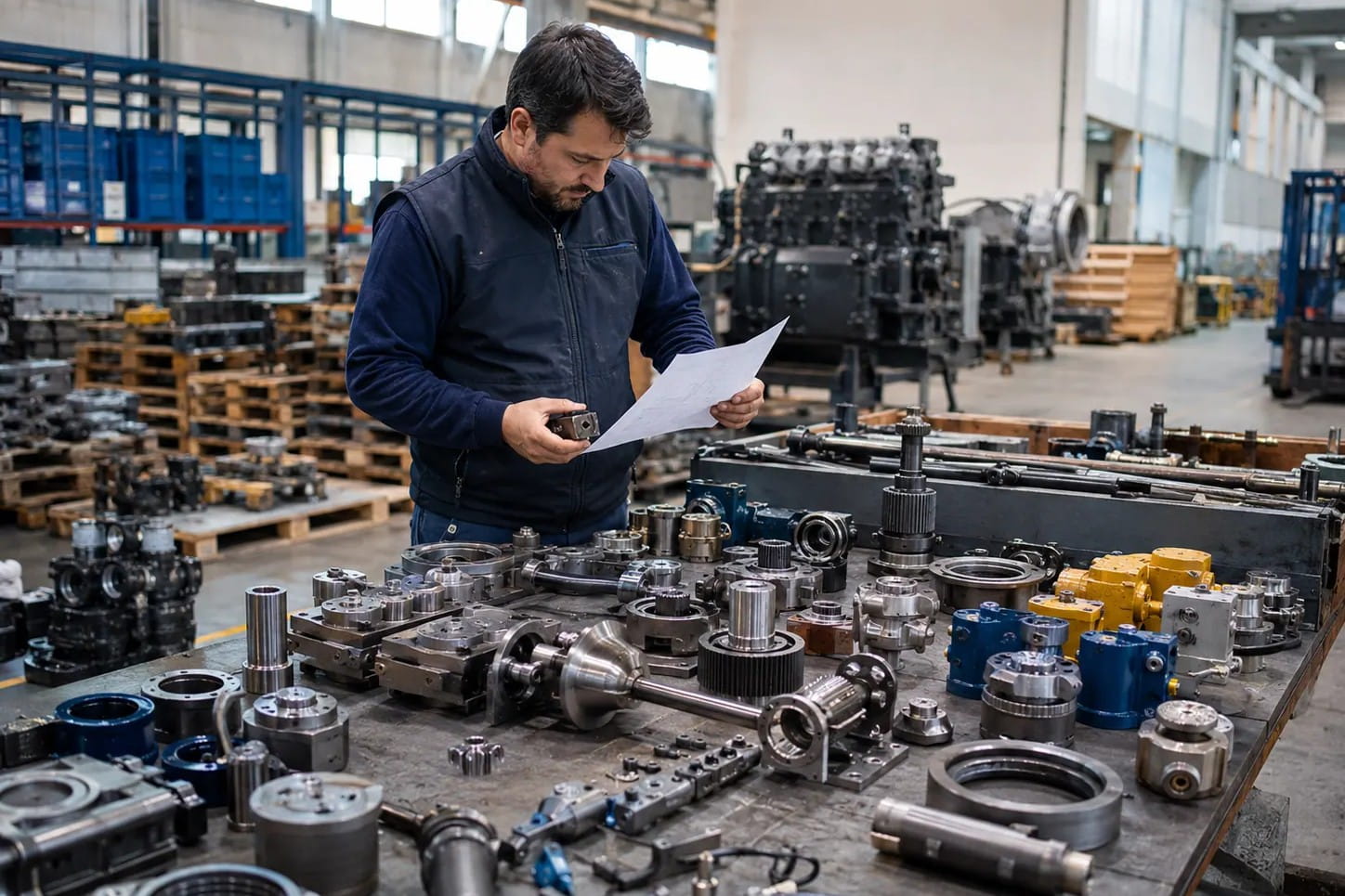
When a customer does not know the exact part number, a sourcing partner can still work from the available evidence. Photos can reveal geometry, connectors, markings and manufacturing details. Drawings can clarify critical dimensions. A machine model can help identify compatible assemblies. Even information about where the part is installed or what function it performs can narrow the search considerably.
Another issue is the distinction between an original part, an approved equivalent and a generic alternative. The appropriate choice depends on the application, criticality and customer requirements. For a non-critical consumable, an equivalent may be perfectly practical. For a precision bearing, sensor, control component or safety-related item, technical compatibility and quality assurance may be much more important than the lowest purchase price.
Lead time is also a major factor in spare parts procurement. A technically correct quotation is not enough if the supplier cannot deliver within the required production window. Stock availability, manufacturing lead time, export preparation and freight should therefore be evaluated together.
A well-prepared spare-parts request does not need to be complicated. A short description, a few photographs, the machine details and the required quantity may be enough to begin the sourcing process. This is why a flexible inquiry system that accepts documents and images can be more useful for industrial customers than a form that requires them to know a specific part number before they can ask for help.