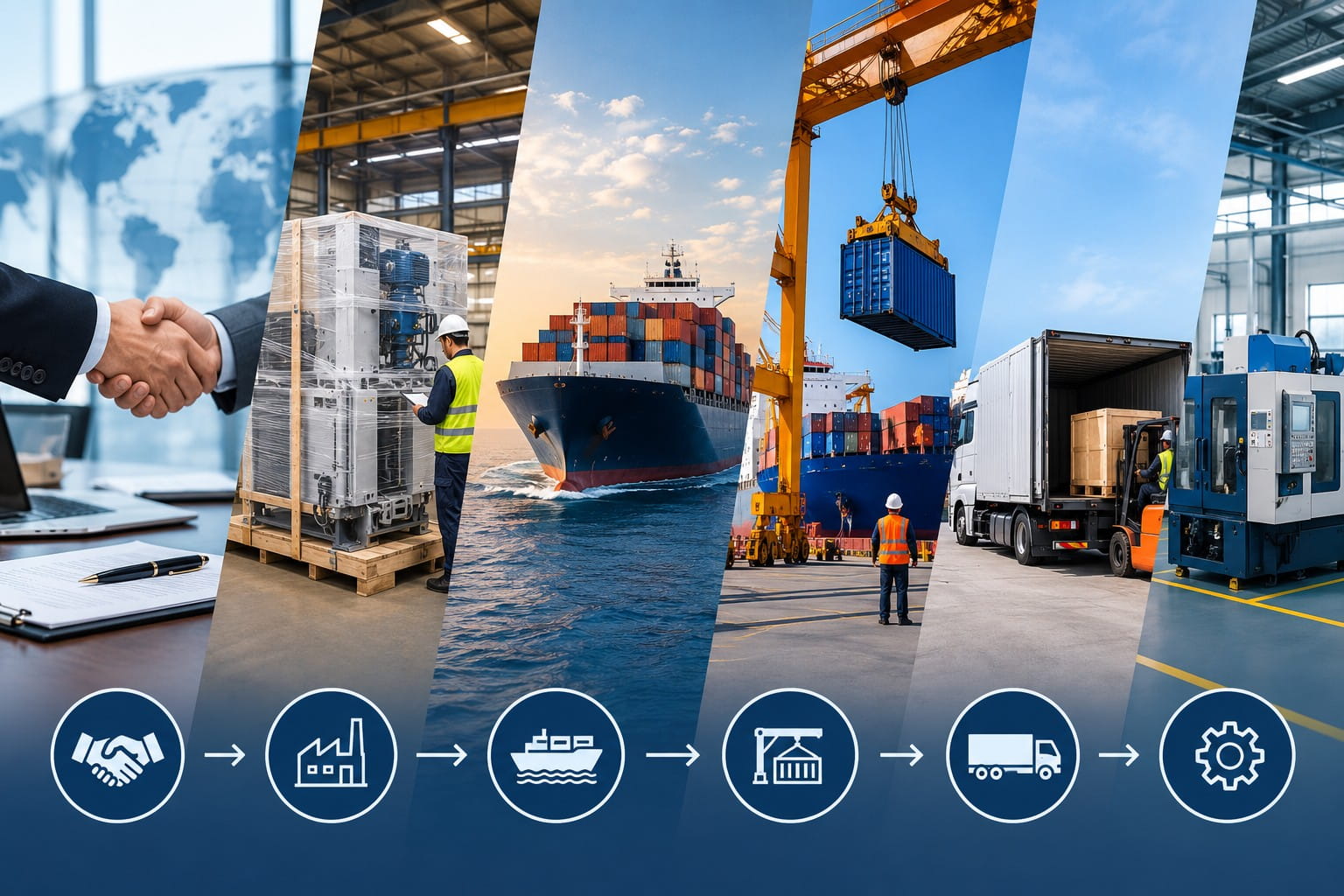
Buying an industrial machine or spare part is only one stage of an international procurement process. The goods still need to be prepared for export, transported, documented, cleared and delivered. For industrial customers, the logistics route can have as much impact on the final result as the purchase price itself.
A practical import process begins with clear commercial terms. The quotation should identify the Incoterm, delivery point, packing responsibility, payment conditions and expected lead time. Terms such as EXW, FCA, FOB, DAP or DDP transfer different responsibilities and costs between the buyer and seller. Understanding these differences before placing the order helps prevent unexpected expenses.
Packing and dimensions should also be confirmed early. Industrial machinery can be heavy, oversized or sensitive to moisture and impact. Gross weight, dimensions, number of packages, pallet requirements and lifting considerations influence freight selection and handling costs. For spare parts, the packing method can still matter because delicate components may require protection against corrosion or mechanical damage.
Export documentation is another critical element. Depending on the shipment, documents may include a commercial invoice, packing list, certificate of origin, transport documents and technical or conformity documentation. Errors in descriptions, quantities, weights or customs classifications can create delays and additional work during clearance.
Freight selection should reflect the urgency and characteristics of the shipment. Air freight can be appropriate for urgent, compact and high-value spare parts, while sea freight may be more economical for machinery and larger consignments. Road transport can be useful for regional suppliers and multimodal routes. The right option depends on the balance between cost, delivery time and cargo characteristics.
Finally, the buyer should consider the complete landed cost rather than the supplier price alone. Freight, insurance, customs duties, clearance, local transportation, handling and other charges can materially change the economics of a purchase. A sourcing partner who understands both purchasing and import coordination can help evaluate these factors before the order is finalized.
For industrial procurement, good logistics is not an afterthought. It is part of the sourcing decision from the beginning, and early coordination can reduce both delays and avoidable costs.